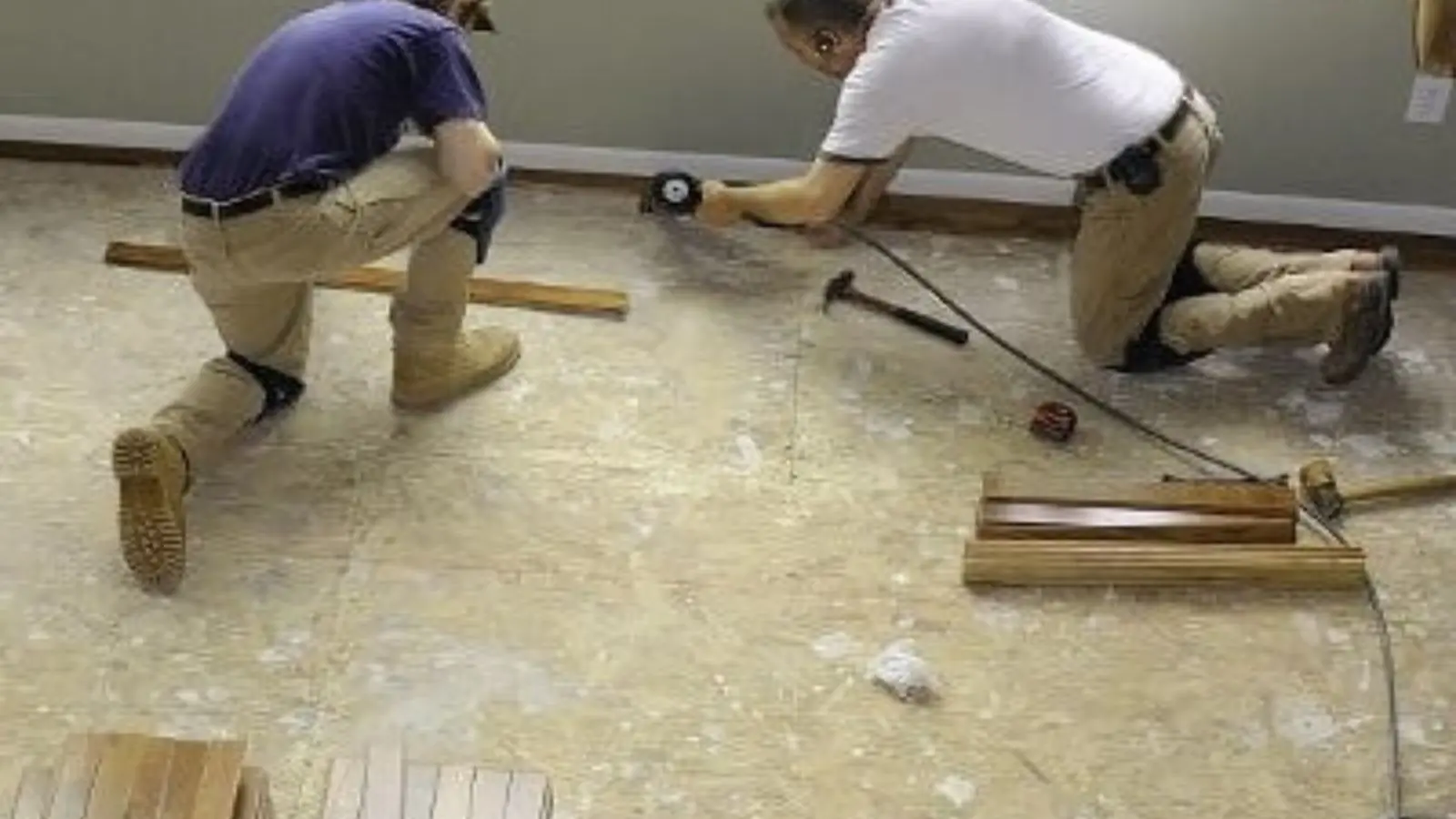
Water damage repair in Westborough, MA starts after the water is out and the structure is dry. This page covers the rebuild: replacing drywall, insulation, flooring, trim and paint so the room works again. Crews cannot rebuild over wet framing, so repair follows drying, which is explained on our water mitigation page.
A typical repair job in town begins with a moisture reading on every surface that got wet. If the numbers are still high, the schedule moves back to drying. If they are in range, the scope list gets written and the rebuild begins.
Why repairs in Westborough homes run into old materials
Westborough's 2025 Housing Production Plan puts about 12 percent of houses in the pre-1940 group and another 30 percent in the 1960s and 1970s. Homes from those eras often hide plaster over lath, older wiring behind the wall that got wet, and layered flooring.
That matters for repair because each layer has its own drying time and its own removal method. A soaked plaster ceiling in a 1930s house does not behave like a sagging drywall ceiling in a 1990s colonial. Ask any contractor how the scope changes if your home is older, and expect a different answer for each material.
Signs the damage needs repair, not just drying
- Drywall that stays soft, bows, or crumbles at the screw heads after the surface feels dry.
- A brown or yellow ring on a ceiling that grows after rain or after the upstairs shower runs.
- Paint that bubbles, peels or flakes off in sheets, usually at the bottom of a wall.
- Baseboards that have swelled, pulled away from the wall, or show black along the top edge.
- Hardwood boards that cup (edges higher than the center) or crown (center higher than the edges).
- Floors that feel spongy underfoot, which often means the subfloor took water.
Not every stain needs a rebuild. A dry stain on a ceiling from a leak that was fixed years ago can be sealed and repainted. A damp stain that is still spreading needs the source found first, then the damaged material cut out.
Ceiling and wall water damage repair
Ceilings give the earliest warning. Water from a roof leak, a failed shower pan or a supply line travels along joists and shows up a few feet away from the real source. A repair that only patches the visible stain usually fails, because the insulation above is still wet.
The usual sequence is simple. The crew finds the source, cuts back the ceiling past the wet edge, removes wet insulation, dries the cavity with air movers and a dehumidifier, and confirms the framing reads dry with a moisture meter. Only then does new drywall go up, followed by tape, mud, primer and paint.
Walls follow the same logic. Drywall is usually cut out about two feet above the highest visible water line, because moisture climbs by wicking. If the wall holds insulation, it is replaced rather than dried in most cases, since wet fiberglass and cellulose rarely recover.
Not sure whether a stain needs repair or only drying?
Floors: when boards can be saved and when they cannot
Hardwood that has cupped after a slow leak can sometimes flatten once it dries, but only if drying is slow and controlled. Sanding too early locks in the cupping. Boards that have buckled off the subfloor, or engineered planks that have delaminated, generally have to be replaced.
Laminate is less forgiving. The fiberboard core swells at the seams and does not shrink back, so a wet laminate floor is usually removed even when the surface looks fine. Vinyl plank and tile often survive if the water did not get underneath, though adhesive and subfloor need checking.
Carpet can be saved after clean water if it is dried quickly. After a contaminated loss, carpet and pad are removed.
| Material | Often saved if | Usually replaced if |
|---|---|---|
| Drywall | Wet briefly with clean water and dried fast | Soft, crumbling, or wet for more than a couple of days |
| Insulation | Never really dry-able in walls | Wet fiberglass or cellulose in a cavity |
| Hardwood | Cupped slightly and dried slowly | Buckled, black-stained, or delaminated |
| Laminate | Rarely | Swollen at the seams |
| Carpet and pad | Clean water, extracted quickly | Contaminated water or long wet time |
| Framing | Reads dry on a meter | Soft or showing rot |
What drives the cost of a repair
Repair cost depends on what has to be rebuilt, not on how dramatic the water looked. These factors move the number the most:
- The water category (clean, gray or contaminated) and how long materials stayed wet.
- The affected square footage, and how many rooms the water crossed.
- The materials involved: plaster, drywall, hardwood, tile, cabinetry or custom trim.
- How many days of drying the structure needed before repairs could start.
- The rebuild scope, including paint matching, permits where the town requires them, and any finish upgrades.
Scope and price should be explained before any work starts, and the scope should be in writing. We do not post fixed prices here because a ceiling patch and a full kitchen rebuild are different jobs.
Want a number for your own house? Call (508) 446-9244 and describe what you see.
Insurance and repair documentation
Sudden and accidental water damage is often covered by a homeowners policy, while gradual leaks and long neglect often are not. Flood damage is usually excluded from a standard policy and needs separate flood coverage, according to the Massachusetts Division of Insurance. Check your policy or ask your insurer which category your loss falls into.
Whatever the cause, document before anything is torn out. Photograph the damage, keep a list of damaged items, and save receipts for emergency steps. A written scope of work makes the conversation with an adjuster easier.
Permits and who does the rebuild
Permit rules vary by the type of work, so ask the Westborough Building Department at 508-366-3015 whether your repair needs one. The office is at 45 West Main Street and handles permit applications for renovations and remodels.
For repair and rebuilding work on an owner-occupied home with one to four units, the state's Office of Consumer Affairs and Business Regulation says contractors must be registered under the Home Improvement Contractor program, and homeowners using an unregistered contractor lose access to the state guaranty fund. It is fair to ask any contractor for their registration before work starts.
Water damage repair connects directly to water damage cleanup, which removes ruined material first, and to mold remediation when a wall stayed wet long enough to grow it. Homeowners in nearby Northborough and Shrewsbury call about the same repairs.
What to do before repairs begin
- Make sure the water source is stopped and the structure is dry.
- Ask for the scope in writing and compare it with your insurer's view.
- Keep photos and moisture readings from the drying stage.
- Decide who handles permits if the work is structural.
Questions we hear most
Press near the stain with a gloved hand. If it feels soft, if the paint bubbles, or if the stain grows after rain or a shower upstairs, the material is still wet and needs to be cut out. A dry, unchanging stain from an old, fixed leak can often be sealed and painted.
Sometimes. Boards that have only cupped slightly can flatten once they dry slowly. Boards that have buckled, turned black, or separated from the subfloor usually have to be replaced. The decision comes from moisture readings, not from how the floor looks.
The scope is written before work starts. It lists what is removed, what is rebuilt, and what finish is matched, so you can decide how much of the rebuild to take on.
Sudden and accidental damage is often covered, and gradual damage from long-term leaks often is not. Flood damage typically needs a separate flood policy. Check your policy and ask your insurer, because wording differs between companies.
It depends on the work. Cosmetic repair may not, while structural work or alterations can. Ask the Westborough Building Department before work begins.