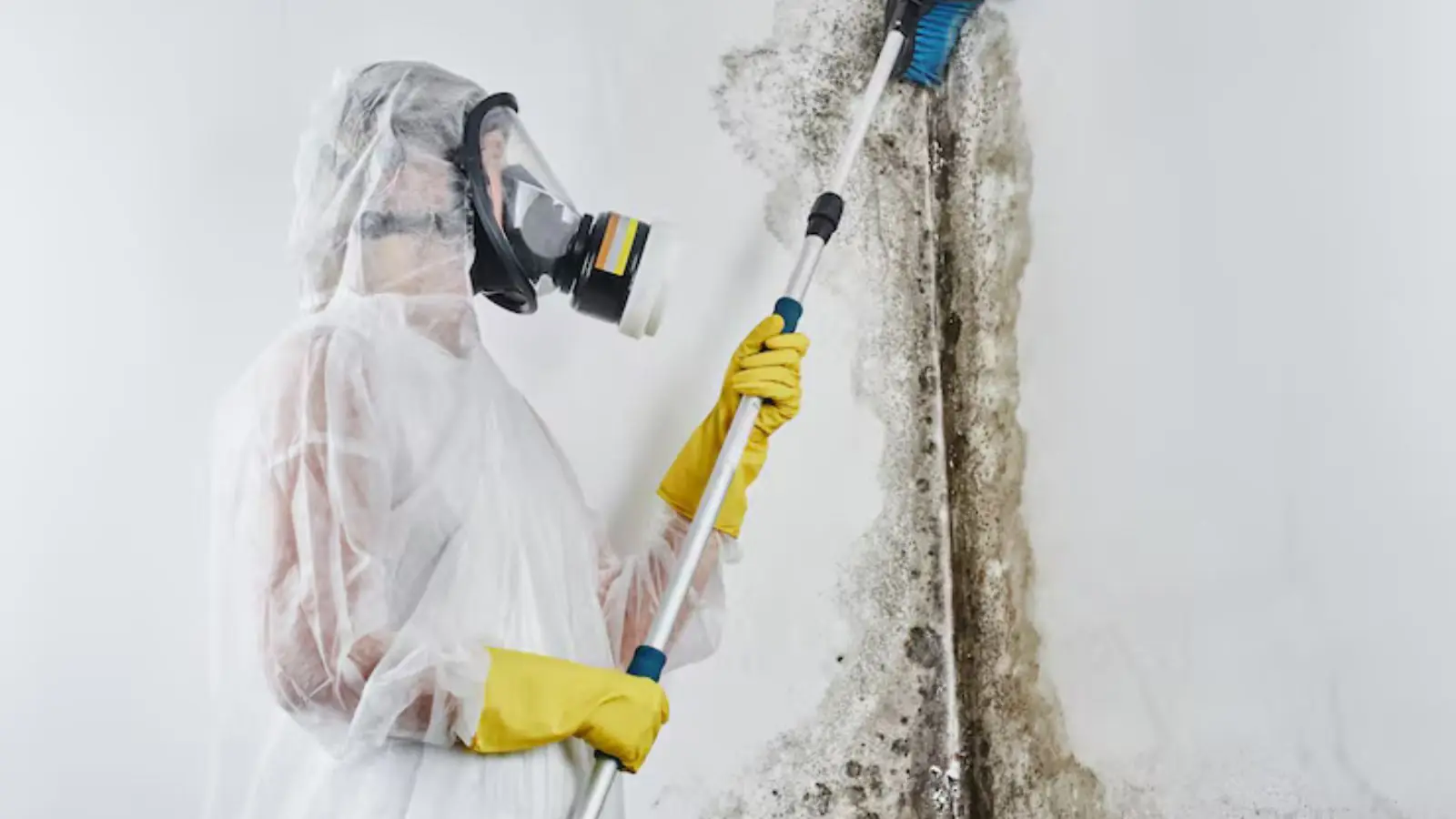
Mold remediation in Westborough, MA follows a moisture problem. Mold needs water to grow, so the first question is where the water came from and whether it has been fixed. This page explains how mold is contained and removed under the ANSI/IICRC S520 standard, when testing makes sense, and when you should call.
We do not diagnose health effects. If someone in your household has a health concern, a physician is the right person to ask.
Is it mold, or is it a stain?
Homeowners usually find mold before they know it is mold. A dark patch on a ceiling corner, a fuzzy spot behind a couch, black speckles around a bathroom fan: these are common first signs. A musty smell in a basement is another.
Wipe a small test area with a damp cloth. If the dark spot smears or the smell returns, moisture is still present. If the stain is dry and the leak is long fixed, it may be only a stain. Either way, the fix starts with the water source.
Mold after water damage
Drying inside about 24 to 48 hours keeps mold from getting a start. Past that point the chance of growth rises. A wet closet wall, an old leak behind a sink, or a basement ceiling under an upstairs bathroom are the usual places.
If you have had water damage in the last few weeks, our water mitigation and cleanup pages explain how drying prevents the problem. If you are already seeing mold, the water source must be fixed first.
How remediation works
- Find and fix the moisture source. Remediation without that is temporary.
- Contain the area with plastic sheeting and negative air machines, so spores do not spread to the rest of the house.
- Remove damaged porous materials, such as drywall and insulation, and bag them in the containment area.
- Clean surfaces that can be cleaned using HEPA vacuuming and damp wiping, and sand or scrub framing where needed.
- Dry the area and check moisture readings.
- Rebuild only when the area is dry and verified.
We do not promise that mold will never return. If moisture returns, mold can too. Controlling humidity, fixing leaks, and running bathroom fans are what keep it away.
Do not disturb it
Scrubbing or cutting into mold without containment can send spores through the house. If the patch is larger than a few square feet, if it is in a wall, or if the leak is unresolved, call before you touch it.
Spotted mold in a closet, basement or bathroom?
Mold removal and black mold cleanup
Color does not tell you how serious mold is. Black mold is a casual name used for dark growth, and testing is the only way to identify species. Remediation treats all growth the same way: fix moisture, contain, remove, clean, dry.
Small spots on hard surfaces, such as a bathroom tile edge, can be cleaned by a homeowner with detergent and water. Growth on drywall, insulation or ceilings generally requires removal of the material.
Mold testing, inspection and clearance
Many callers ask whether they need testing. The Massachusetts Department of Public Health does not recommend routine mold testing as part of water damage remediation in public buildings, and the same logic applies to most homes. Visible mold needs to be removed whether or not a test identifies it.
There are situations where testing makes sense. A buyer's lender may require proof that mold has been removed before closing, which is common in real estate transactions. In that case, an independent clearance test after remediation gives a third-party record. Independent means the tester does not do the removal.
We cannot promise that any lender or buyer will accept a given report. Ask them what they require before the work starts.
Mold licensing and registration
Ask whether your state licenses mold work. We did not find a Massachusetts license for mold remediation on the state's site, so do not take anyone's word on that. What you can ask for is a written scope, whether the crew works to ANSI/IICRC S520, and, for repair or rebuild work on an owner-occupied one to four unit home, whether the contractor is registered under the Home Improvement Contractor program.
What drives mold remediation cost
- The size of the affected area and whether it is in the open or inside a wall.
- Containment needs, including negative air machines and sheeting.
- The materials removed: drywall, insulation, trim or subfloor.
- How many days of drying and air filtration are needed.
- The rebuild scope and any clearance testing.
Mold work should come with a scope and price you can read before it begins. Insurance may cover mold that results from a covered sudden loss, but mold from long-term moisture is often excluded. Check your policy and ask your insurer.
Neighbors in Shrewsbury and Grafton call for the same reasons, and our water damage repair crews handle the rebuild after clearance.
Questions we hear most
It depends on the size of the area, whether it is inside a wall, the containment needed, and the rebuild. You hear the scope and price before work starts, and a call is the quickest way to get a realistic range for your house.
Not always. Visible mold needs to be removed, and the moisture source must be fixed. Testing can help with a real estate sale, a lender requirement or a dispute, and independent clearance testing after removal gives a record.
Bleach does not penetrate porous materials, and drywall holding mold is normally removed. For small spots on hard surfaces, detergent and water works.
Yes, after the moisture source is dealt with. Hard surfaces can be cleaned, and drywall, insulation and other porous materials are removed under containment.
It can be when it results from a covered sudden water loss. Mold from slow leaks or humidity is often excluded. Check your policy and ask your insurer.