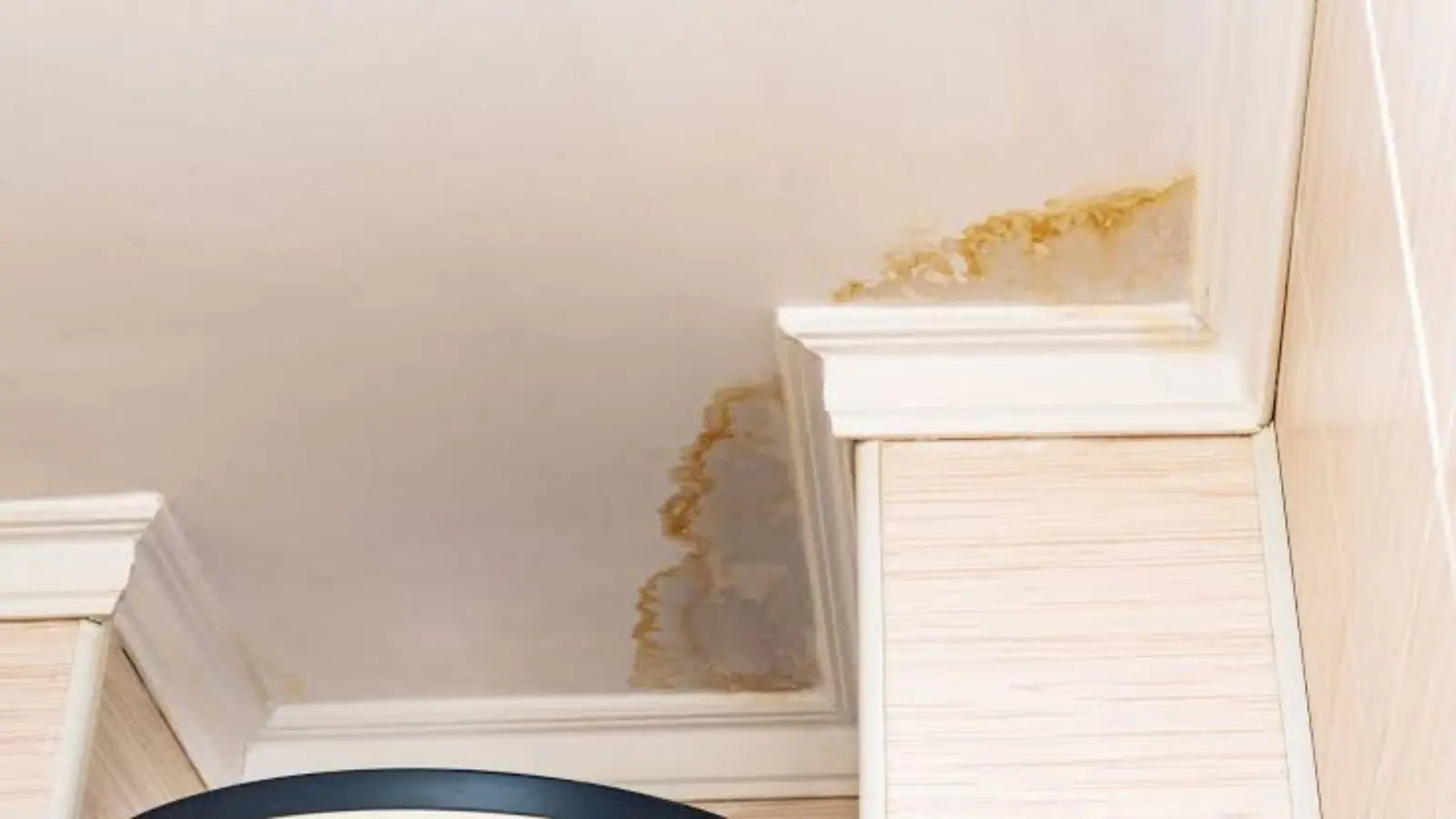
A water stain on a ceiling tells a story if you know how to read it. Where it sits, what color it is and when it appears point to different causes: a roof, a pipe, a vent, or a window. Matching the clue to the cause is the first step toward a repair that holds.
This post is about diagnosing a stain. For how to fix the ceiling once the cause is stopped, see the repair guide on this site.
Read the stain
| What you see | Likely cause | First thing to check |
|---|---|---|
| Brown ring that grows after rain or snowmelt | Roof leak, flashing or ice dam water | Roof, attic insulation and the area above the stain |
| Stain under a bathroom or laundry | Plumbing leak or failed pan | Supply lines, drain, tub and shower seals above |
| Stain near a vent or register | Condensation or a leaking duct | Duct insulation and the attic |
| Yellow stain with no change | Old, dry leak | Confirm with a moisture meter, then seal and paint |
| Drips at light fixtures | Water traveling along wiring | Turn off the circuit and call an electrician |
| Stains along an exterior wall edge | Poor insulation and condensation, or a gutter issue | Gutters, insulation and window flashing |
Timing is a clue
A stain that appears only after rain or snowmelt points to the roof or siding. A stain that grows after the upstairs shower points to a leak in the plumbing or pan. A stain that appears in cold weather and dries in summer often points to condensation in the attic.
A stain that never changes may be old. A moisture meter or thermal camera tells you whether it is still wet, which is far more reliable than touching it.
Winter water: snow load and ice dams
Snow and ice are a major cause of ceiling water in New England. Heat escaping into the attic melts the snow at the roof, and that water refreezes at the cold eaves. The ice dam blocks runoff, and water backs up under the shingles and into the ceiling.
Insulation and air sealing in the attic, not roof raking, stop the cause. If water is already coming in, protect the room, document the damage and call, because wet insulation above the ceiling holds water against the drywall.
Stain growing or ceiling dripping?
What not to do
- Do not paint over a wet stain. It will bleed through again.
- Do not stand under a bulging ceiling. Saturated drywall can fall.
- Do not ignore stains near lights. Water and wiring are a hazard.
- Do not wait. Wet insulation and drywall can grow mold within days.
What a crew does for a stained ceiling
A crew measures moisture first, to see how far the water went. If the ceiling is wet, it is opened and dried, and ruined material is removed under our cleanup process. If it is dry, the stain can be sealed and painted. Rebuilding is covered under water damage repair.
Homeowners in Southborough and Grafton see the same patterns, and older roofs and attics are a common thread everywhere.
Questions worth asking a roofer or plumber
- Where does the water enter, and how do you know?
- Is the flashing, vent or skylight the cause?
- Is the attic insulation wet, and does it need to come out?
- Can the repair be tested with water before the ceiling is closed?
- What should I look for next time it rains or thaws?
A confirmed cause is worth more than a guess. A roofer who can show a failed flashing, or a plumber who can show a weeping joint, saves you from repairing the ceiling twice.
Documenting for insurance
Take photos of the stain with a tape measure or coin for scale, and repeat them every few days. Note the weather on the days it changed. Keep a record of anyone you call. If the damage was sudden, tell your insurer promptly, and ask what they need.
When the water has soaked the drywall, drying and removal belong under mitigation. Residents in Hopkinton and Shrewsbury follow the same steps.
Can I leave it until spring?
A stain that appears in winter is tempting to postpone. The problem is that wet insulation and drywall can grow mold quietly and can make a small stain much bigger. If the ceiling is wet, deal with it now. If it is dry and the cause is clear, you can plan the repair.
Either way, write down what you see, take photographs and decide on a deadline. Open issues have a way of becoming emergencies.
Local note: the winter storm record
Westborough's Hazard Mitigation Plan lists the major winter storms that have affected the region, and FEMA declared major disasters covering Worcester County for the 2015 winter (DR-4214) and a March 2018 winter storm (DR-4379).
The plan does not give ice dam dates for the town, and neither the National Weather Service nor the state publishes them in a form we could cite, so we do not state any. Snow load and heat loss are the practical issue for any roof in town.
Source type: Westborough Hazard Mitigation Plan (CMRPC) and FEMA disaster declarations DR-4214 and DR-4379.
Questions homeowners ask
Not if a moisture reading shows it is dry and the leak is fixed. Seal it with a stain-blocking primer and repaint.
Often because warm air escapes into a cold attic and condensation or ice dams form. Insulation and air sealing address the cause.
Often if the cause was sudden, such as a burst pipe or storm damage, but not if it was a long-term leak. Check your policy and ask your insurer.
The Westborough Building Department at 508-366-3015 can say whether roof or structural repairs need a permit. A roofer or insulation contractor diagnoses the cause.