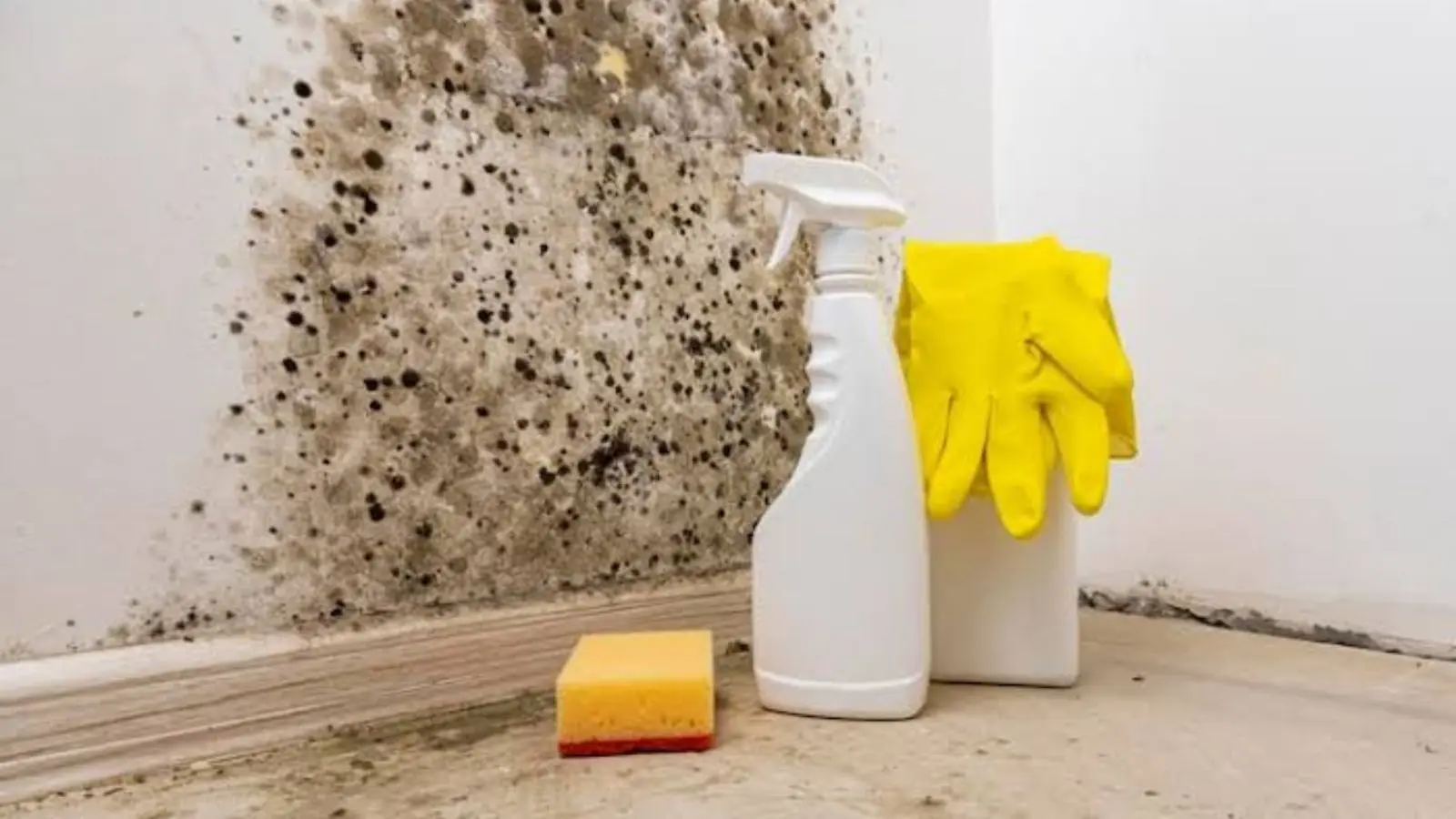
Mold on interior walls is often blamed on old houses, and old houses do have more to blame. Cold exterior walls, minimal insulation, gaps around windows and chimneys all push humid indoor air onto surfaces where it condenses. Mold finds those wet spots first.
This guide looks at why walls grow mold, how plaster and drywall differ and what to do about each.
Why walls grow mold
| Cause | Where it shows | Fix |
|---|---|---|
| Condensation on cold exterior walls | Corners, behind furniture, north walls | Insulation, air sealing, dehumidifier |
| Roof or window leak | Under windows, near the ceiling line | Repair the leak, dry the wall |
| Plumbing leak in the wall | Below a bath, kitchen or laundry | Repair the line, open and dry |
| Humidity from bathing and cooking | Bathrooms, kitchens | Exhaust fans vented outdoors |
| Rising damp in a basement wall | Lower walls on the ground floor | Drainage and moisture barriers |
Plaster versus drywall
Plaster over lath is common in older homes. It is dense and holds up to surface mold better than paper-faced drywall does, and surface growth can sometimes be cleaned. Drywall is paper-faced and feeds mold, so moldy drywall is removed and replaced.
Either wall can hide a wet cavity. A moisture meter or thermal camera shows what a paint job conceals.
Mold on a wall and you cannot find the cause?
Behind the wallpaper and paint
Bubbling paint, peeling wallpaper, stained baseboards and a musty smell are the usual clues of a wet wall. If you see them, a pinhead moisture meter or a professional reading is worth more than another coat of paint.
How the repair goes
- Find and stop the moisture source.
- Open the wall around the damage and dry it.
- Remove moldy drywall, insulation and trim that cannot be cleaned.
- Clean framing and plaster surfaces and let them dry.
- Rebuild, prime and paint.
The removal part is on the mold remediation page. The rebuild belongs to water damage repair. Older homes in Northborough and Shrewsbury follow the same steps.
Prevention that works
- Run exhaust fans during and after showers and cooking.
- Keep furniture a few inches off cold exterior walls.
- Keep indoor humidity between 30 and 50 percent.
- Fix gutters and flashing before the wet season.
What to do about wallpaper
Wallpaper hides moisture and holds it. Bubbling, staining or a musty smell behind wallpaper is a good reason to peel back a small corner. If you find dark growth on the back of the paper or the wall, the wall needs to be dried and the paper removed.
Window sills and corners
- Wipe condensation from windows in cold weather.
- Check caulk and weatherstripping for gaps.
- Look in closet corners on exterior walls, where air barely moves.
- Leave space behind large furniture.
- Use a dehumidifier in rooms that stay damp.
Small habits keep a wall dry. Larger problems, such as a leak in the wall, need a repair.
If the wall is wet inside, see water mitigation for the drying step. Homeowners in Southborough and Shrewsbury deal with the same causes.
How far does the wall damage go?
Surface mold on a wall may be only the visible part. Behind it, the back of the drywall and the insulation may be damp or moldy. In older houses with plaster, the lath behind may hold moisture too. That is why a reading with a meter is better than relying on the paint alone.
If readings are only slightly high and the source is fixed, drying in place can work. If readings are high, the wall is opened so the cavity can dry fully.
A quick comparison of repair routes
| Route | When it fits | Trade-off |
|---|---|---|
| Clean and dry in place | Surface growth on sound plaster or painted wall, source fixed | Needs follow-up readings |
| Open the cavity and dry | Wet readings behind the surface | More patching and painting |
| Remove and replace the wall section | Moldy drywall or insulation | Highest cost, most reliable |
| Replace the wall and fix the source | Repeated leaks or condensation | Needs a plumber, roofer or insulation work |
Ask which route is proposed and why. A clear reason, tied to readings, is better than a flat statement that the wall must come out.
Painting after the repair
Once the wall is dry and the repair is done, a stain-blocking primer evens the surface and paint finishes it. Choose a paint suited to the room, since kitchens and baths take more moisture than bedrooms. Wait until readings show the wall is dry before you paint, or the new paint will bubble.
Keep humidity under control afterward, because paint is not a substitute for a dry wall.
Renters should email the landlord with dated photos so there is a record.
Local note: older housing and historic districts
The Westborough Housing Production Plan, citing Census survey data, reports that roughly 12 percent of the town's homes were built in 1939 or earlier, and about 30 percent between 1960 and 1979. Older and mid-century houses can have thin insulation and original plumbing.
Westborough also has historic districts. If you own in one, check with the Building Department at 508-366-3015 before changing exterior features while repairing a wall.
Source type: Westborough Housing Production Plan and Town of Westborough.
Questions homeowners ask
The usual causes are condensation, a leak or humidity. A moisture reading finds the cause.
Surface growth on sound plaster can sometimes be cleaned. If the plaster is crumbling or wet behind, it needs to be opened up.
No. The mold continues under the paint, and the paint peels once the moisture returns.
Simple patching usually does not, but structural work can. Ask the Building Department at 508-366-3015.