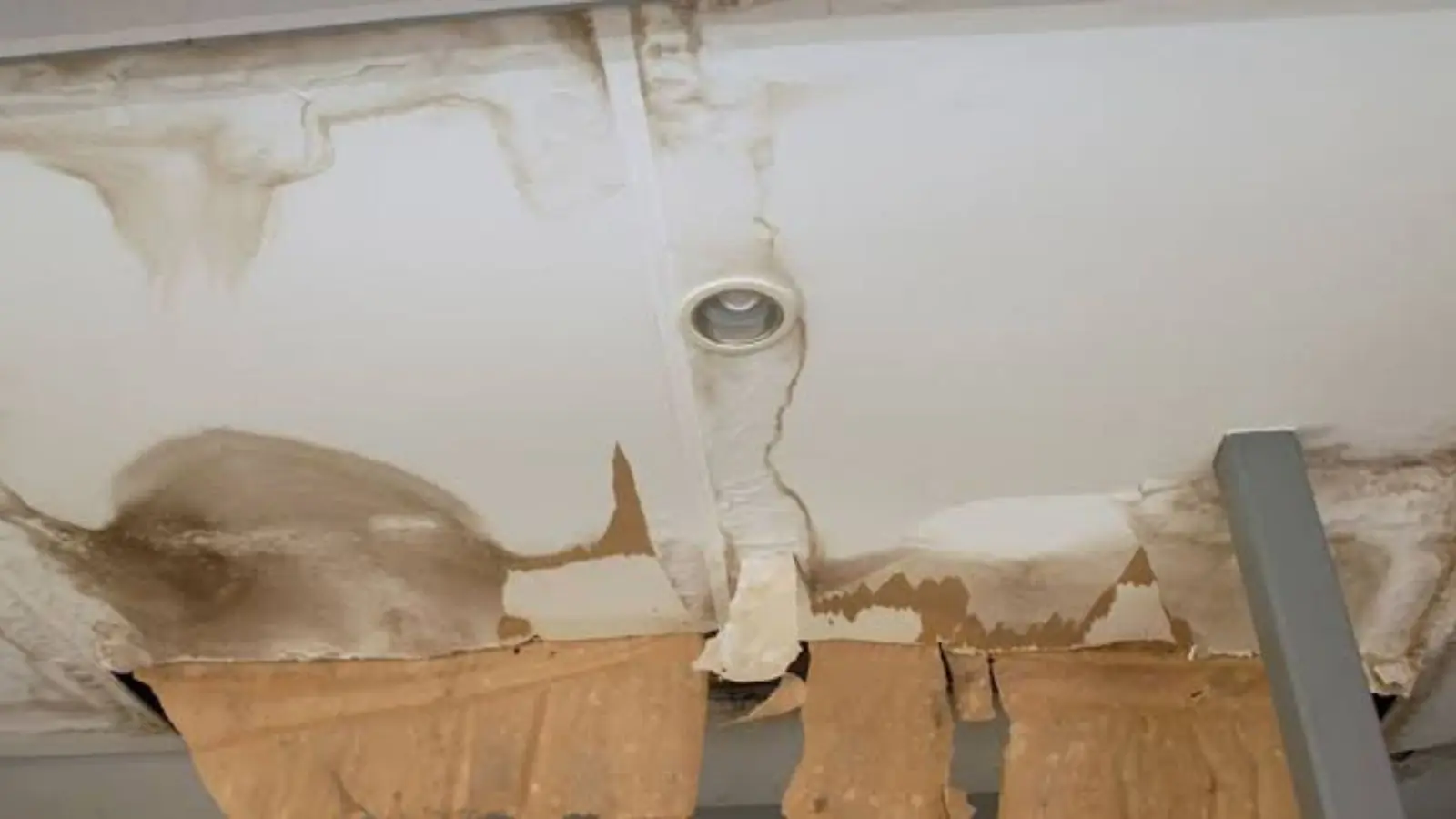
Mold on a ceiling is a sign that moisture has been reaching it for a while. It usually starts at a corner, a seam or around a vent, and it spreads in rings or patches. Getting rid of it takes more than a spray and a coat of paint, because the ceiling material and the cavity above it are often wet.
Here is how to work out what is feeding it, what to clean and what to cut out, and when it is time to call.
Where ceiling mold comes from
- A bathroom or laundry above, where a leak or a poorly vented shower sends moisture upward.
- A roof leak or ice dam water that wets the insulation and drywall.
- Attic condensation, when warm air leaks into a cold attic and meets the roof deck.
- A plumbing line, an HVAC condensate line or a refrigerator ice maker line that drips in the ceiling cavity.
- A skylight or chimney flashing that has failed.
Before cleaning, find the source. If the stain is directly below a bathroom, check the shower pan, the tub caulk and the supply lines. If it follows the roofline, check the roof and attic. Cleaning a ceiling under an active leak is pointless.
Dry it fast: the 24 to 48 hour rule
Massachusetts Department of Public Health guidance for water-damaged public buildings sets a 24 to 48 hour window for drying porous materials, and the EPA gives the same range. After that, mold growth becomes likely. A ceiling that took water last week and still looks damp has already passed it.
That is why drying matters as much as cleaning. Our water mitigation page explains how air movers and dehumidifiers get a cavity dry without tearing out the whole room.
Clean it or cut it out
| Ceiling type | Small surface mold | Mold with water damage |
|---|---|---|
| Painted drywall | Wipe with detergent and water if dry and firm | Cut out, replace and dry the cavity |
| Textured drywall | Harder to clean, often replaced | Cut out and replace |
| Plaster | Clean if hard and dry | Assess keys and lath, patch or replace |
| Acoustic or drop ceiling tiles | Replace the tiles | Replace tiles and check the space above |
Ceiling tiles and similar porous material that hold mold are often discarded, the EPA's guide says. Drywall holding mold behind the paint is treated the same way.
Mold on a ceiling larger than a doormat, or a soft ceiling?
Doing a small cleanup safely
- Cover the floor and furniture, and turn off the HVAC fan so spores do not travel.
- Wear an N-95 respirator, goggles without vent holes and long gloves.
- Mix detergent and water, wipe the area and rinse the cloth often.
- Dry the surface with a fan and check it again in a day.
- If the stain returns or the material is soft, stop and call.
Keep bleach away from ammonia products. It cannot reach growth inside drywall, which is why the EPA says removal matters more than killing.
When to bring in a crew
Call when the area is larger than about 10 square feet, when the ceiling is sagging, when insulation above is wet, or when the cause is a roof leak or sewage. A crew contains the room, cuts back past the wet edge, removes the insulation and dries the cavity before rebuilding. The process is the same as on our mold remediation page.
If the water event was large, a water damage repair crew finishes the ceiling afterward. Neighbors in Grafton and Northborough get the same service.
Cleaning a small ceiling patch step by step
- Fix the leak or ventilation problem first, or the patch returns.
- Wear an N-95 respirator, gloves and goggles without vent holes, and lay plastic below.
- Wipe the area with detergent and water, and avoid soaking the drywall.
- Bag the cloths, dry the ceiling with a fan and a dehumidifier, and check again in a few days.
- If the paint bubbles or the ceiling feels soft, stop and call.
What a hidden source looks like
Ceiling mold in a room with no bathroom or kitchen above usually points to the roof, an attic, a window, or a duct. Attic ducts that carry warm air can sweat in cold weather and drip onto the ceiling. Roof leaks often travel along a rafter before they reach the drywall, so the stain may be a long way from the hole.
A moisture meter or thermal camera shows the wet area without cutting. If the readings are high, the ceiling needs to be opened.
Opening, drying and removing the damage is described on the mold remediation page, and the ceiling repair afterward is covered on the water damage repair page. Homes in Southborough and Hopkinton with finished attics should pay special attention to the duct runs.
Ceiling mold in more than one room?
Local note: why timing matters in a Westborough house
State public health guidance written for water-damaged public buildings sets the drying window for porous materials at 24 to 48 hours. Homes are not covered by it, but the same window is a sensible target.
The Westborough Public Health Department at 508-366-3045 can say who handles housing and mold concerns in town, since the department's website does not list them. If you rent, tell your landlord in writing and keep a copy.
Source type: Massachusetts Department of Public Health and Town of Westborough.
Questions homeowners ask
No. Painting hides it but leaves the growth and the moisture. Stain-blocking primers do not fix a leak.
A moisture meter or thermal camera shows it. If the drywall is soft, stained in rings or bulging, assume it is wet and call.
It depends on the work. A cosmetic patch may not need one, but ask the Building Department at 508-366-3015 before structural work.
It can if moisture returns. Fix the source, ventilate bathrooms and keep humidity in the 30 to 50 percent range that the EPA suggests.