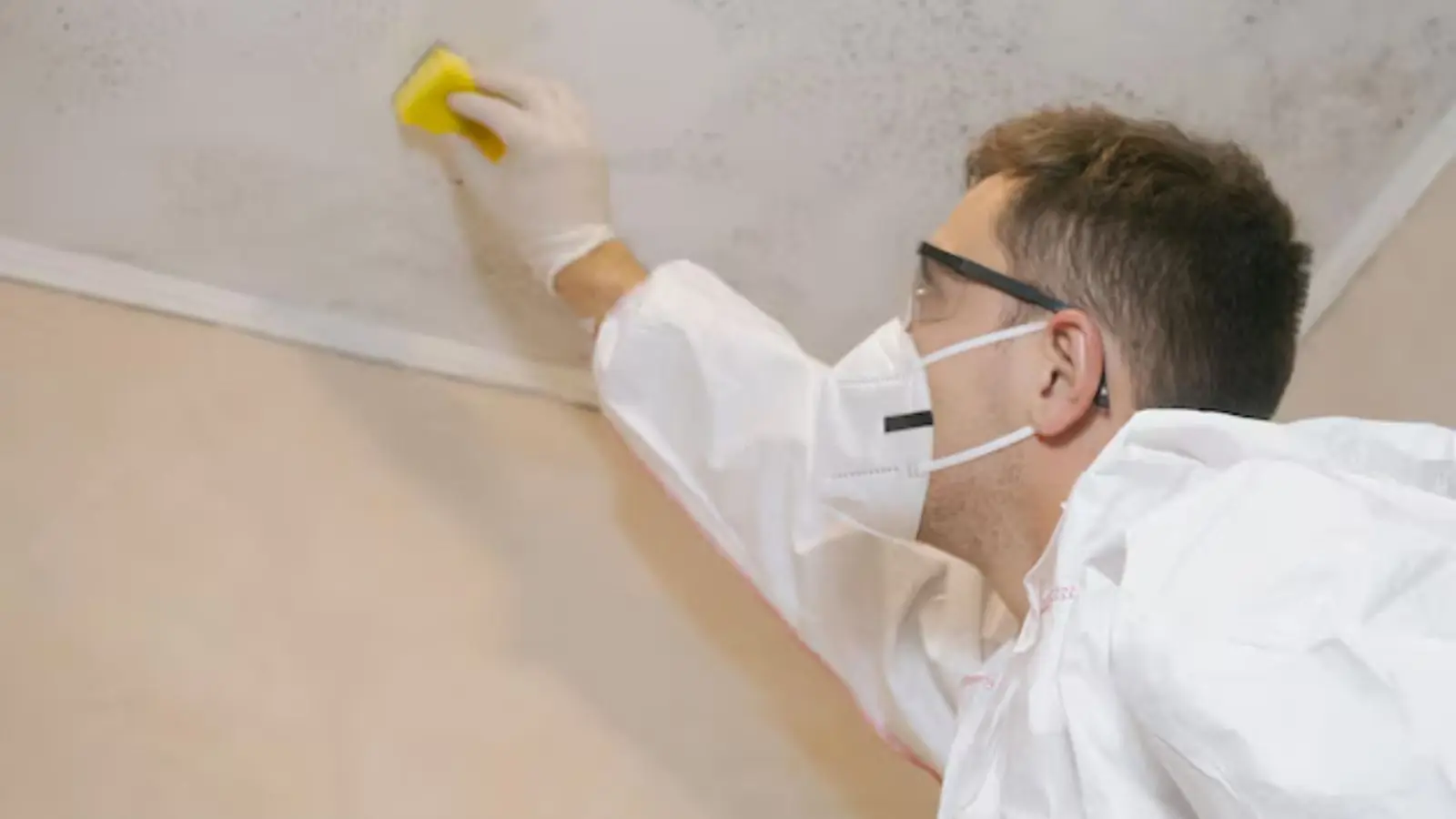
The EPA's guide to mold cleanup in the home gives a clear rule of thumb: if the moldy area is less than about 10 square feet, roughly a 3 foot by 3 foot patch, most people can handle it themselves. Larger areas, or any mold caused by a hidden leak, call for more.
This post turns that guidance into steps you can follow, and explains when to stop.
Step zero: find the water
Mold needs moisture. If you clean it and the source remains, it comes back. Look for leaks, condensation, wet insulation and poor drainage. The EPA says to fix the water problem first, since cleanup without a fix is temporary.
Protect yourself
- An N-95 respirator, not a paper dust mask.
- Gloves, long sleeves and goggles without vent holes.
- Open a window or run a fan to the outdoors if possible.
- Keep children, pets and anyone with breathing concerns out of the area.
What you can clean and what you throw out
| Material | Clean or discard | Notes |
|---|---|---|
| Glass, metal, tile, sealed countertops | Clean | Detergent and water, then dry |
| Wood, painted surfaces | Usually clean | Scrub, dry fully |
| Drywall, ceiling tiles, insulation | Discard if moldy | Porous, hard to clean |
| Carpet and pad | Often discard | Depends on how long it was wet |
| Books, papers, upholstery | Often discard | Valuable items can go to a specialist |
The cleaning steps
- Isolate the room with plastic and tape, and close vents.
- Remove porous materials that are moldy and bag them before moving them through the house.
- Scrub hard surfaces with detergent and water.
- Vacuum with a HEPA vacuum and wipe with a damp cloth.
- Dry everything completely within a day or two.
- Watch the area for weeks and keep humidity under control.
Bigger than a few square feet, or you cannot find the leak?
What about bleach?
The EPA does not recommend routine bleach use for mold cleanup. Bleach does not reach into porous material, and the point is to remove mold, not just discolor it. Never mix bleach with ammonia or other cleaners.
When to bring in a professional
- The area is larger than about 10 square feet.
- Mold came from sewage or flood water.
- It is inside walls, under floors or in the HVAC system.
- You have health concerns or a weakened immune system.
- It keeps returning.
The professional steps, including containment and air filtration, are on the mold remediation page. For the water side, see water mitigation. We serve Southborough, Hopkinton and the towns around Westborough.
A short checklist before you start
- Water source found and stopped.
- Respirator, gloves and goggles on hand.
- Heavy plastic bags for debris.
- Detergent and water, not a mix of products.
- A fan or dehumidifier ready for drying.
- A plan for items that cannot be cleaned.
Why it comes back
Mold returns when a hidden source stays wet. The cleaned surface looks fine for a week or two, then the spots reappear. That is a sign the moisture is behind the wall, under the floor or in the air. At that point, more scrubbing does not help.
The fix is to find the water, whether it is a slow pipe leak, a roof leak, a condensation problem or a drainage issue. Once the area is dry for good, the mold does not return.
If your cleaning has not worked, a professional can take readings and open the wall. See the cleanup service for the wet side. Homeowners in Northborough and Grafton reach the same point.
Cleaning supplies that are enough
Detergent and water, stiff brushes, rags you can throw away, heavy bags, a HEPA vacuum if you have access to one and a way to dry the room are enough for a small area. You do not need a cabinet of products. Mixing products adds risk without adding results.
Dispose of cleaning rags in sealed bags. Wash your clothes separately afterward and shower to remove spores from skin and hair.
Keeping humidity in range
A hygrometer costs little and tells you what the air is doing. The EPA suggests a range of 30 to 50 percent. In summer a dehumidifier may be needed, and in winter a humidifier may be the culprit. Check the reading in the places mold appeared, not just in the middle of the house.
Cleaning up after yourself
Remove the plastic carefully, folding it inward so dust stays inside. Wipe surfaces near the work area with a damp cloth. Run the vacuum, with a HEPA filter if you have one, over floors and nearby furniture. Wash your hands and arms, and change your clothes before you sit down.
If you hired help, ask what they recommend for the first week, and ask whom to call if something looks wrong.
Local note: where to find public guidance
The EPA guide for homeowners is free online, and the Massachusetts Department of Public Health publishes its own indoor air and mold guidance. Both say the same basic thing: find and fix the moisture, then remove the mold.
The Westborough Public Health Department, 508-366-3045, can tell you whether a local office handles a housing or rental concern. Its web page does not list mold services, so call and ask.
Source type: U.S. EPA, Massachusetts Department of Public Health and Town of Westborough.
Questions homeowners ask
For areas under about 10 square feet, wear protection, scrub hard surfaces with detergent and water, discard porous materials and dry everything. Fix the moisture first.
The EPA does not recommend routine bleach use. The goal is to remove mold. Never mix bleach with ammonia.
Testing is usually not needed to decide to clean. If you can see or smell mold, treat it as mold and fix the moisture. Ask a professional if you want sampling.
When the area is large, hidden, caused by sewage or flood water, or keeps coming back.