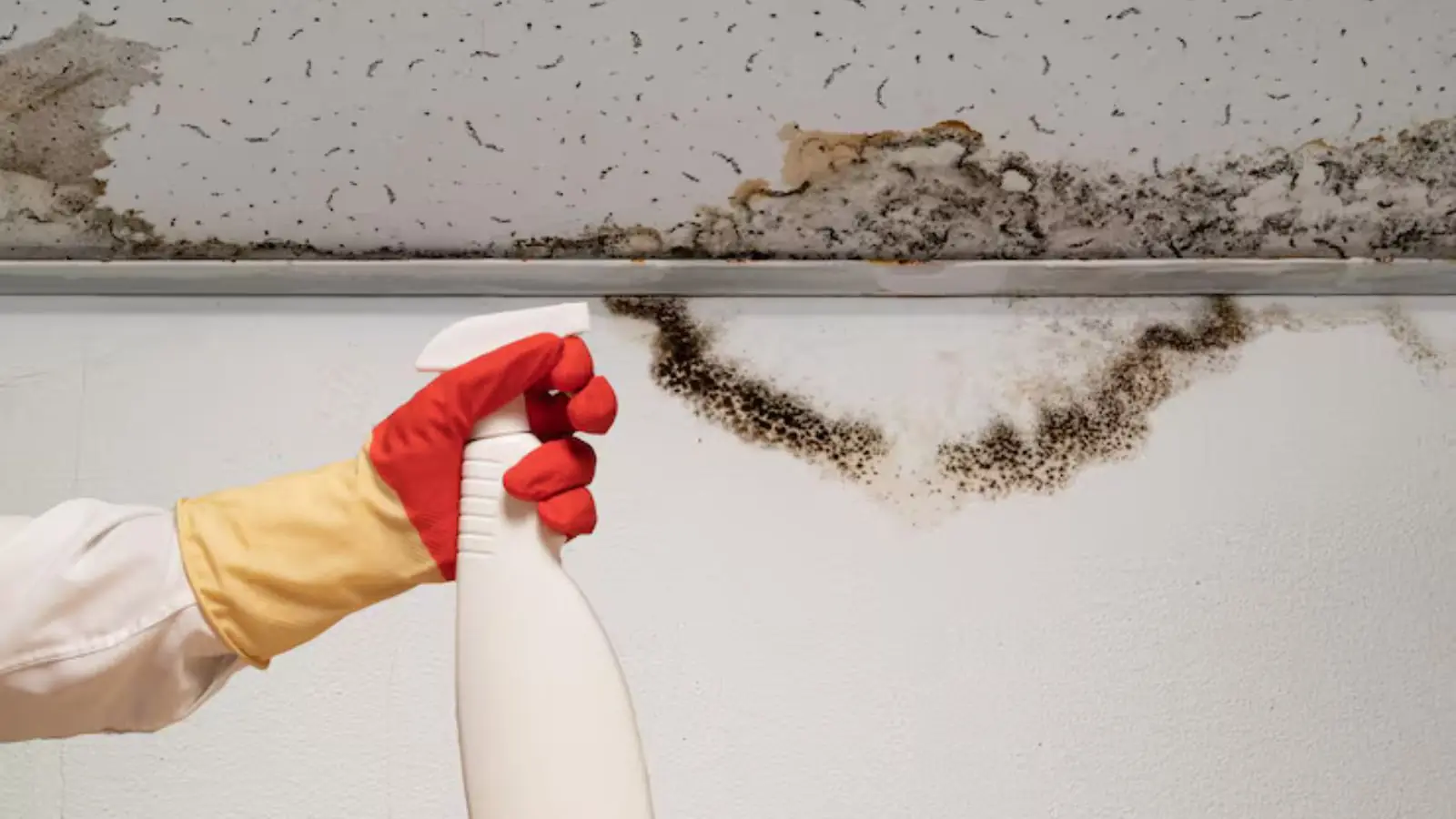
Black specks on a bathroom ceiling are one of the most common mold calls, and most of them have the same cause: a shower that puts a lot of steam into a room that cannot get rid of it. The mold is a symptom. The ventilation, or a leak above, is the problem.
Here is how to read what you see, what a homeowner can safely clean and what means the ceiling needs more than a sponge.
Is it black mold, mildew or just dirt?
Color alone does not identify mold. "Black mold" is a casual name for dark growth, and only lab testing can name a species. In practice, remediation treats all visible growth the same way: fix the moisture, remove the growth, dry the area.
A quick check helps. Dirt and soap film wipe off cleanly. Mildew sits on the surface and wipes away with detergent. Growth that returns within days, smells earthy, or sits on soft or stained drywall points to moisture in the ceiling itself.
Why bathroom ceilings grow mold
| Cause | How to tell | What fixes it |
|---|---|---|
| Weak or unvented exhaust fan | Fan is quiet, mirror stays fogged, fan ducts into the attic | Replace the fan and duct it to the outside |
| Fan not run long enough | Mold collects after showers, mostly in the corners | Run the fan during and after showers |
| Leak from above | Stain with a ring, ceiling soft, stain after a bath upstairs | Find and repair the leak, dry the cavity |
| Cold ceiling surface | Condensation on an outside wall or under a cold attic | Insulation and air sealing |
| Failed shower pan or caulk | Stain near the shower wall | Re-caulk or repair the shower pan |
Ducting an exhaust fan into the attic only moves the steam, and the attic then has the moisture problem. The fan should discharge outdoors.
Ceiling soft, bulging or covered in dark patches?
Cleaning a small patch safely
- Open the window, run the fan, and put on an N-95 respirator, gloves and goggles without vent holes.
- Wipe with detergent and water, rinse the cloth often and bag it afterward.
- Let the ceiling dry completely and check it again in a few days.
- Do not mix bleach with ammonia-containing cleaners.
- If the patch is larger than about 10 square feet or the paint peels, stop.
The EPA says homeowners can usually handle areas under about 10 square feet. Anything larger, or any ceiling damaged by water, deserves a professional look.
When the ceiling needs to come down
If the drywall is soft, if the stain grows, or if the growth returns in a week, moisture is in the ceiling. A crew cuts out the damaged section, dries the cavity, replaces the drywall and primes it before painting. Painting over it with mold-resistant paint hides the problem and does not fix it.
The process is described on our mold remediation page, and the rebuild after drying belongs to water damage repair.
The same bathrooms exist in Northborough and Shrewsbury, and the same fixes apply.
Landlords, tenants and condos
If you rent, tell the landlord in writing and keep a copy. If you own a condo, tell the association or management company, since the cause may be above your unit. Photograph the ceiling and date the pictures.
Fixing the ventilation
A bathroom fan should move steam outdoors, and it should be sized for the room. A fan that is loud and weak is not doing its job. If the duct ends in the attic, or is crushed, the steam goes into the attic space and the ceiling stays damp.
Run the fan during the shower and for a while afterward. A timer switch makes that automatic. If there is a window, opening it helps, but in cold weather a fan does the work without chilling the room.
Painting after the fix
Once the ceiling is clean, dry and sound, a stain-blocking primer and a mold-resistant bathroom paint make a good finish. Paint is the last step, not the first. If the dark patches return within weeks, the moisture is still there, and the ceiling needs a closer look.
Do not mix cleaners
Never mix bleach with ammonia or with acidic cleaners. The fumes can hurt you, and a bathroom is a small space.
A bathroom that sits under a leaking roof or an upstairs tub is a different job. In that case the drywall may need to be replaced, and the cleanup service is where the wet material is removed. This is common in Southborough and Grafton homes with older plumbing runs.
When the stain comes back after you fix it
If the dark patches reappear after a thorough cleaning and a better fan, check the attic or the room above. Insulation that has slipped can leave a cold spot on the ceiling, and that spot collects moisture. A roof vent, a bath fan hose or a plumbing line may also be leaking.
A professional with a moisture meter or thermal camera can find those hidden causes faster than trial and error.
Local note: who to ask in Westborough
The Westborough Public Health Department can be reached at 508-366-3045. Its web page does not describe housing or mold complaints, so call and ask who handles them if you rent or if a landlord is not responding.
Roughly 38 percent of Westborough homes are rented, since only 61.8 percent are owner-occupied in Census data. That is a large share of residents who may need a landlord to fix a ceiling or a fan.
Source type: Town of Westborough and U.S. Census Bureau QuickFacts.
Questions homeowners ask
We cannot diagnose health effects. Treat visible growth as a sign of moisture, clean small patches safely or call, and ask a physician about any health concern.
No. Paint helps only after the moisture is fixed and the old growth is removed. It will not stop a leak or a weak fan.
On a hard, sealed ceiling surface, some people do, but detergent and water works and avoids fumes. Do not combine bleach with ammonia cleaners, and note that it cannot soak into drywall to reach growth inside.
Start with the Westborough Public Health Department at 508-366-3045 and ask who handles housing concerns. Keep written records of your requests.