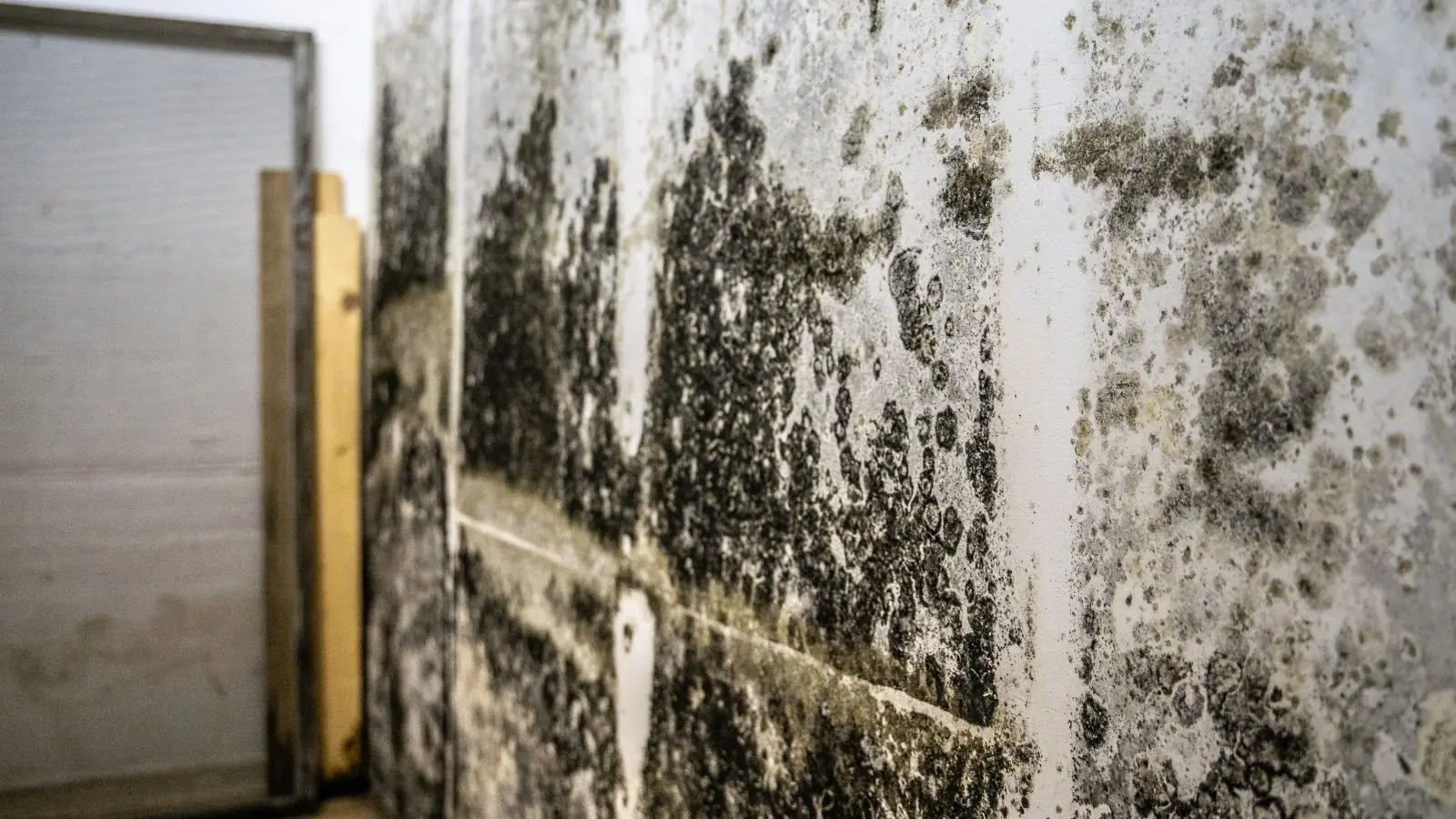
A musty smell, a dark patch on a block wall, or white powder on the floor: basement mold usually shows up quietly. Getting rid of it in a Westborough house comes down to three jobs in order. Find the water, take out what cannot be cleaned, and dry the space until it stays dry.
This guide explains how to tell what you are looking at, what a homeowner can handle, and when a crew with containment makes more sense. It does not diagnose health effects, because that question belongs to a physician.
Start with the moisture, not the mold
Mold needs moisture, so cleaning without fixing the source buys a few weeks. Walk the basement with a flashlight and look at the usual suspects. Check for a sump pit that fills and does not empty, a window well that holds water and a gutter that dumps near the foundation. Look at the water heater and washer line for weeping, and at cold water pipes that sweat in summer.
A simple test helps. Tape a square of plastic wrap to a concrete wall and leave it for two days. Moisture on the wall side means water is coming through the concrete. Moisture on the room side means humid indoor air is condensing on a cold surface.
Decide what you are dealing with
| Where it is | Likely cause | Usual next step |
|---|---|---|
| Painted block or poured wall | Seepage or condensation | Fix the water path, then clean hard surfaces and dry |
| Drywall or paneling on an outside wall | Water wicking from the slab or wall | Cut out wet material, dry the cavity, rebuild |
| Carpet and pad | Leak, flood, or long-term dampness | Remove and replace, often the whole room |
| Wood framing or sill plate | Long-term moisture | Clean or scrub if sound, call a professional if soft |
| Stored boxes and cloth | High humidity | Discard porous items, move the rest off the floor |
Powder on a block wall can be efflorescence, a salt left by water, rather than mold. It still tells you water is moving through the wall.
What you can handle and what you cannot
The EPA's guide to mold says that when mold covers less than about 10 square feet, most people can handle the cleanup themselves. Larger areas, extensive water damage and anything involving sewage call for a professional. Porous materials such as carpet and ceiling tiles can be a loss once they hold mold.
If you clean yourself, wear an N-95 respirator, long gloves and goggles without vent holes. Use detergent and water on hard surfaces, and never mix chlorine bleach with ammonia-based products. The EPA also notes that it is not enough to kill mold, since it has to be removed.
Mold covering more than a few square feet, or soft drywall?
How a crew handles a bigger basement job
- Fix or confirm the fix of the moisture source.
- Seal the work area with plastic sheeting and run a HEPA air filtration unit or negative air machine.
- Remove wet drywall, paneling, carpet and insulation, bagged inside the containment.
- Clean hard surfaces with HEPA vacuuming and damp wiping.
- Dry with air movers and dehumidifiers until moisture readings are normal.
- Rebuild only after the area passes a visual check, and an independent clearance test if you or a lender want one.
Our mold remediation page explains the same process in more detail, and the water mitigation page covers drying.
Keeping the basement dry afterward
The EPA recommends keeping indoor humidity below 60 percent, and ideally between 30 and 50 percent. An inexpensive humidity meter tells you where you are. A dehumidifier sized for the space, a working sump pump with a battery backup, downspouts that discharge away from the house and soil that slopes away from the foundation handle most basement humidity.
No company can honestly promise mold will never return. If moisture comes back, mold can too, so the control is the water, not the cleaner.
Neighbors in Northborough and Shrewsbury ask the same questions, and the same line serves them.
Questions to ask before you hire anyone
A basement mold job is easy to under-scope. Ask who will find the moisture source, because removal without a fix is a repeat call. Ask how the work area will be sealed off from the rest of the house, and how air will be filtered while material is removed. Ask what happens to the drywall, insulation and carpet that come out, and who rebuilds the wall afterward.
Ask for the scope in writing, with the areas and materials listed. A vague promise to treat the basement is not a scope. You should also be told what the job does not include, such as waterproofing or foundation work, which are separate trades.
What a follow-up check looks like
After removal and drying, a moisture reading of the wall and floor shows whether the basement is actually dry. Run a dehumidifier for several weeks and watch for the smell, the staining and the humidity reading. If the humidity creeps above the 30 to 50 percent range the EPA suggests, find out why before it turns into the next mold patch.
Many basements need a mix of services. The wet part is covered under water mitigation, and the rebuild under water damage repair. Neighbors in Hopkinton and Grafton often ask about the same sequence.
Safety note
Do not mix cleaning products, and do not sweep or dry-brush moldy material. Wear an N-95 respirator, gloves and goggles, and keep children and pets out. If anyone has a health concern, talk to a physician.
Local note: Westborough floodplain numbers
Of 215 properties exposed to a 100-year flood, the town's Hazard Mitigation Plan says 206 have structures. Among the roads it flags are Oak and Chauncy Streets by Lake Chauncy and the Jackstraw Brook roads off Warren Street.
Those are planning figures for the town, not a prediction for any basement. Look up your address on the FEMA flood map, and ask the Building Department at 508-366-3015 before any excavation or foundation work.
Source type: regional planning agency and town hazard mitigation plan.
Questions homeowners ask
It can be when it follows a covered sudden water loss, such as a burst pipe. Mold from long-term seepage or humidity is often excluded, and flood damage usually needs separate flood coverage. Check your policy and ask your insurer.
No. Paint hides the stain but leaves the growth and the moisture. Clean or remove the material, fix the water source and dry the area first.
Call when mold covers more than about 10 square feet, when drywall or carpet is wet, when water came from sewage or flood, or when you cannot find the moisture source.
The town hazard plan lists several, including Oak Street, Chauncy Street, Warren Street and Maynard Street. A road on the list does not mean your basement floods, but it is a reason to test the sump pump.